

Table of Contents
- Why Freshness Changes Everything in Your Cup
- Coffee Roast Date vs Expiration Date: Which One Actually Matters
- The Coffee Bloom Test: Your Fastest Freshness Check
- Sensory Checks: Aroma, Appearance, and Taste
- How to Store Coffee Beans for Maximum Freshness
- Freshness Testing for Pre-Ground Coffee and Brew Troubleshooting
- Conclusion
- Frequently Asked Questions
Last Updated: September 13, 2026
Why Freshness Changes Everything in Your Cup
Fresh coffee is not a marketing claim, it is a measurable chemical state. Once roasted beans leave the roaster, they release carbon dioxide and take on oxygen, stripping away the volatile compounds that create flavor. This guide from Chicago Roast Coffee breaks down how to tell if coffee beans are fresh using tests you can run in your kitchen in under five minutes.
Here is the part most guides get wrong: the bag in your pantry is almost certainly older than you think. Grocery shelves move slowly, and "best by" dates tell you nothing about when the coffee was actually roasted. Below, we'll cover seven checks that separate genuinely fresh beans from beans that merely look the part.
Coffee Roast Date vs Expiration Date: Which One Actually Matters
The roast date is the only date that matters for flavor. An expiration date tells you when a manufacturer considers a product safe to sell, not when it peaked. For roasted coffee, those two dates can sit months apart.
What the Roast Date Tells You
The roast date is the day the beans finished their roast cycle, and everything about freshness flows from that number. Beans hit their best drinking window a few days after roasting, once they have released enough carbon dioxide to brew evenly, then hold peak flavor before oxidation takes over.
If a bag shows only a "best by" date, work backward. Many roasters print a best-by window that runs well past peak flavor.
Why Expiration Dates Are Misleading
Expiration dates on coffee exist for retail logistics, not your palate. They keep a bag legally sellable for months, a shelf-life calculation, not a flavor calculation.
What most guides miss is that a far-off expiration date is often a warning sign, not a reassurance. It usually means the roaster expects the bag to sit in distribution for a long time.
The Coffee Bloom Test: Your Fastest Freshness Check
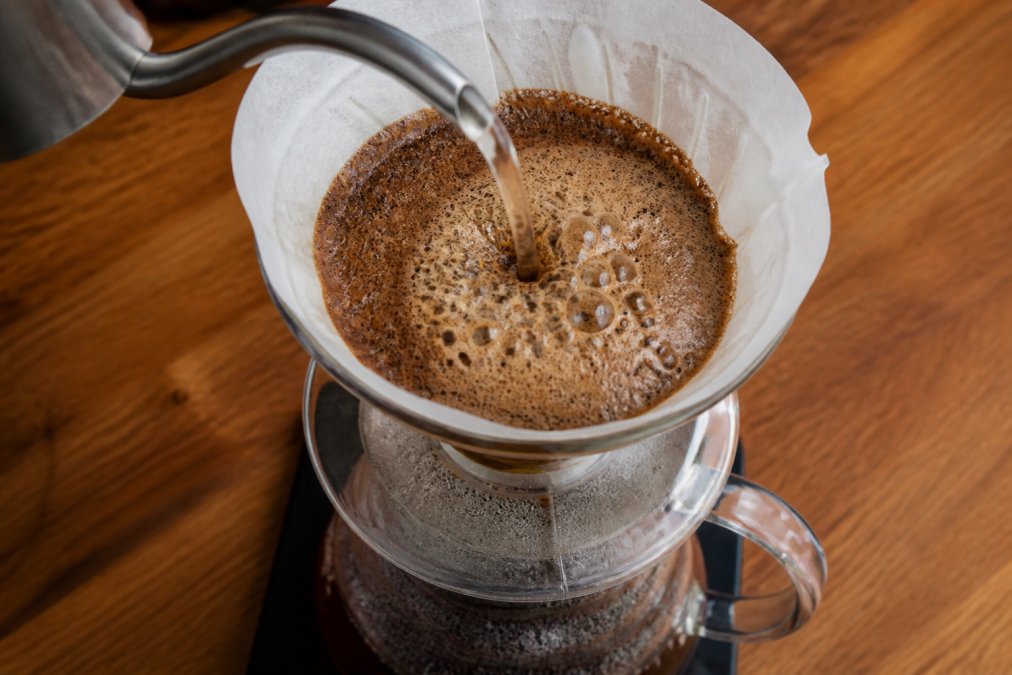
The coffee bloom test is the single fastest way to judge freshness: pour hot water over ground coffee and watch how much the bed swells. Fresh beans release trapped carbon dioxide on contact, pushing the grounds into a thick, foamy dome. Flat, quiet grounds mean the gas is already gone.
Why the Bloom Happens: The Chemistry Behind the Bubbles
Roasting drives off moisture and builds pressure inside the bean, much of it carbon dioxide. A freshly roasted bean can hold many times its own volume in CO2, and that gas migrates slowly from the interior to the surface over days to weeks, hence the "rest" period roasters talk about.
When hot water hits the grounds, it accelerates that release: water dissolves into the bean structure, the trapped CO2 escapes, and the gas lifts the coffee bed. The bloom is degassing made visible. Two variables control how violent it looks:
- Water temperature. Water just off a boil, roughly 195 to 205 degrees Fahrenheit, drives a much stronger bloom than lukewarm water (How Hot is Hot Enough? Brew Temperature, Sensory Profile, and Consumer Acceptance of...). Below about 180 degrees Fahrenheit the release slows and the test under-reports freshness (Influence of Various Factors on Caffeine Content in Coffee Brews).
- Grind freshness. Freshly ground coffee blooms harder than coffee ground days ago, because grinding exposes enormous new surface area and the CO2 starts escaping immediately. A bag of whole beans can pass the test while the same beans ground last week fail it.
How to Run a Bloom Test at Home
The full test takes about three minutes and needs no special equipment.
- Grind a small scoop of beans to a medium-coarse consistency.
- Place the grounds in a mug or pour-over cone.
- Heat water to just off a boil, then pour a small amount evenly over the grounds.
- Wait 30 to 45 seconds without stirring.
- Watch the surface: count the bubbles, note how high the bed rises, and check whether the grounds stay foamy or collapse.
Reading the Results
A vigorous bloom with lots of foamy bubbles signals a fresh roast still holding its carbon dioxide. A weak bloom with scattered bubbles points to older beans. No bloom at all means the coffee has finished degassing and is well into oxidation.
A Rough Timeline for What the Bloom Tells You
The bloom follows a fairly predictable arc after the roast date, though the exact curve depends on roast level and storage:
- Days 1 to 3: The bloom is explosive and can be almost too aggressive, sometimes pushing the bed up fast enough to disturb an even pour. This is the degassing window roasters mean by "rest."
- Days 4 to 14: The bloom is strong and steady, the sweet spot for most brewing methods, and the easiest range to read.
- Weeks 3 to 6: The bloom weakens noticeably. A bag that once domed up now barely rises, and the aroma has started to flatten.
- Past 6 to 8 weeks: Little to no bloom. The CO2 is essentially gone and oxidation has taken over the flavor compounds.
Dark roasts degas faster than light roasts because the longer, hotter roast develops more internal pressure and a more porous structure (Carbon monoxide emission rates from roasted whole bean and ground coffee). A dark roast can look tired at three weeks while a light roast still blooms hard at five.
What the Bloom Test Cannot Tell You
The bloom measures carbon dioxide, and carbon dioxide is only one part of freshness. A bean can still be off-gassing while oxidation has already dulled its aromatics, especially if stored warm or exposed to air. That is why the bloom test works best as the first check in a sequence, pair it with the aroma and taste checks below.
Sensory Checks: Aroma, Appearance, and Taste
Your senses catch what a date stamp hides. Aroma, surface texture, and taste each reveal a different stage of the freshness curve, and together they give a fuller picture than any single test.
Aroma and Scent Indicators
Open the bag and smell immediately. Freshly roasted coffee hits with a bright, complex aroma that shifts as it cools. Stale coffee smells flat, papery, or faintly like cardboard, oxidation talking, long before the coffee tastes obviously wrong.
Visual Inspection of Beans
Look closely at the surface. Fresh beans have a matte finish with a subtle sheen depending on roast level. Heavy oily residue means the beans have been sitting a while, though dark roasts naturally show more oil, so factor roast level into your read.
A quick checklist for the visual pass:
- Surface looks matte to lightly glossy, not slick
- Beans are uniform in color with no dull, grayish cast
- No visible moisture or clumping inside the bag
- No fine dust or broken fragments coating the bottom
Taste confirms what your nose suspected. Fresh coffee tastes layered, with acidity, body, and a clean aftertaste. Stale coffee tastes hollow, flat, and slightly bitter in a way no grind adjustment fixes.
How to Store Coffee Beans for Maximum Freshness
The best storage method keeps oxygen, moisture, heat, and light away from the beans. Those four factors drive oxidation, which turns a bright roast papery. Whole bean coffee holds its flavor longer than pre-ground because far less surface area is exposed.
Containers, Valves, and Common Storage Mistakes
An airtight container with a one-way valve is the practical standard: the valve lets carbon dioxide escape during degassing while keeping oxygen out, exactly what a freshly roasted bean needs.
Common storage mistakes that quietly wreck freshness:
- Storing beans in the original bag rolled open at the top
- Keeping coffee in the fridge, where moisture and odors migrate in
- Transferring beans to a clear container on a sunny counter
- Grinding a week's worth at once and storing the grounds
Freshness Testing for Pre-Ground Coffee and Brew Troubleshooting
Pre-ground coffee is harder to read because you lose the visual and bloom cues whole beans give you. Use your nose first, then a small test brew. If the grounds smell flat or papery, the coffee is past its best window regardless of the date on the bag.
How to Judge Pre-Ground Coffee Without the Bloom
Grinding exposes surface area, and surface area is where oxidation happens. That is why pre-ground coffee stales far faster than whole bean, often in days rather than weeks once opened. You can still run a structured check:
- Smell the bag the moment you open it. Fresh pre-ground coffee releases a bright, layered aroma. Flat, papery, or dusty-smelling grounds are already oxidizing.
- Rub a pinch between your fingers. Fresh grounds feel slightly oily or cool and release aroma as you rub. Stale grounds feel dry and powdery and give off almost nothing.
- Brew a small, controlled cup. Use a consistent ratio and water temperature so the only variable is the coffee. A hollow, papery, or faintly cardboard taste is the signature of oxidized grounds.
- Watch the crust, not the dome. Even pre-ground coffee will foam slightly when hot water hits it. A thin, quick-collapsing crust is a weaker signal than a whole-bean bloom, but a total absence of foam is a strong sign the coffee is spent.
Packaging Materials and Why They Matter More Than Most People Think
Packaging plays a bigger role than most people realize. Three things determine how fast a bag loses freshness:
- Barrier film. Multi-layer foil or metallized bags block oxygen and light. Plain paper bags do neither, so coffee in paper can lose noticeable aroma within days of opening.
- One-way degassing valve. The valve lets carbon dioxide escape during the first weeks after roasting while keeping oxygen out. A bag with no valve either traps CO2 (and puffs up) or, if it is porous, lets oxygen in freely.
- Resealability. A zip closure or a bag you can clamp shut slows the oxygen exchange every time you open it. A rolled-open paper bag is essentially an open window.
A useful rule: the more layers and the tighter the seal, the slower the fade. If you buy pre-ground coffee in a plain paper bag, finish it quickly and transfer the remainder to an airtight container the day you open it.
Distinguishing Stale Beans from Bad Brewing
This is the diagnostic step most guides skip. A bad cup does not automatically mean bad beans. Before you throw out a bag, separate the variables.
| Symptom | Likely Cause | What to Check First |
|---|---|---|
| Sour, thin cup | Under-extraction | Grind size, water temperature |
| Bitter, harsh cup | Over-extraction | Grind size, brew time |
| Flat, papery cup | Stale beans | Roast date, storage method |
| Weak bloom | Finished degassing | Bloom test, bag seal |
| Inconsistent cup, same beans | Uneven grind or dose | Grinder consistency, scale accuracy |
Run the checks in this order so you do not chase the wrong problem:
- Confirm the beans first. Does the bag smell bright? Does the bloom (or crust) show any life? If both fail, the beans are the issue and no grind adjustment will save them.
- Then check grind size. If the beans pass but the cup is sour or bitter, you are almost certainly under- or over-extracting. Move the grind one step coarser or finer and brew again.
- Then check water temperature. Water well below 195 degrees Fahrenheit under-extracts and tastes sour; water at a rolling boil can scald and taste harsh. Aim for the 195 to 205 degree range.
- Then check dose and ratio. An inconsistent scoop or an uncalibrated scale produces cups that vary even when nothing else changed.
If the coffee passes the bloom test and smells bright but still tastes wrong, the problem is your brewing variables, not the beans. Adjust grind size and water temperature before blaming freshness.
Conclusion
The gap between a great cup and a forgettable one usually comes down to a single number: the roast date. Once you know how to tell if coffee beans are fresh, you stop guessing at the grocery shelf and start buying coffee that still has its flavor intact.
That is why Chicago Roast Coffee aims to provide consumers a way to taste the different coffees of the world. If your coffee tastes hollow and papery, the beans were the problem, not your brewing. If your coffee tastes hollow and papery, the beans were the problem, not your brewing.
Get started with Chicago Roast Coffee and taste what a genuinely fresh roast does for your morning cup.
Last Updated: September 13, 2026
Frequently Asked Questions
How long do coffee beans stay fresh after the bag is opened?
Whole beans stay at their best for about two to four weeks after opening if stored in an airtight container away from light, heat, and moisture. After that window, the coffee beans fresh quality drops noticeably. The roast date matters more than the open date, since beans begin degassing and oxidizing the moment they leave the roaster. If your bag has been open for six weeks or more, expect flatter flavor and weaker aroma.
Does the roast date matter more than the expiration date?
Yes. The roast date tells you exactly when the beans were roasted, while expiration dates are often set months out and say little about actual freshness. For the best cup, look for a roast date within the past two to four weeks. If a bag only shows a best-by date with no roast date, you have no reliable way to judge how long those beans have been sitting on a shelf.
How can you tell if coffee beans have gone rancid?
Rancid beans smell like cardboard, damp paper, or old cooking oil instead of sweet and roasty. Visually, they may look dull rather than glossy, and dark roasts can show heavy oily residue that has turned sticky. When brewed, rancid coffee tastes flat, hollow, or papery with a harsh aftertaste. If a bloom test produces few or no foamy bubbles, that is another strong signal the beans have lost their carbon dioxide and gone stale.
What is the best way to store coffee to maintain freshness?
Keep whole beans in an airtight, opaque container stored at room temperature, away from the stove, windows, and direct sunlight. A one-way valve on the bag or container lets carbon dioxide escape without letting oxygen in. Avoid the fridge for daily use because moisture and odors migrate into the beans. For longer storage, vacuum seal small portions and freeze them, then grind straight from frozen to protect the flavor profile.